Introducing Groovy Retro Symphony: Where Nostalgia Meets Timeless Typography
Imagine opening a well-loved vinyl record sleeve — the faint scent of aged paper, the warm crackle before the first note begins, the effortless charm of hand-drawn liner notes. Now picture that same feeling translated into typography. That’s the magic of Groovy Retro Symphony: a font that doesn’t just display text — it evokes emotion, invites memory, and adds soul to every word it shapes.
What Is Groovy Retro Symphony?
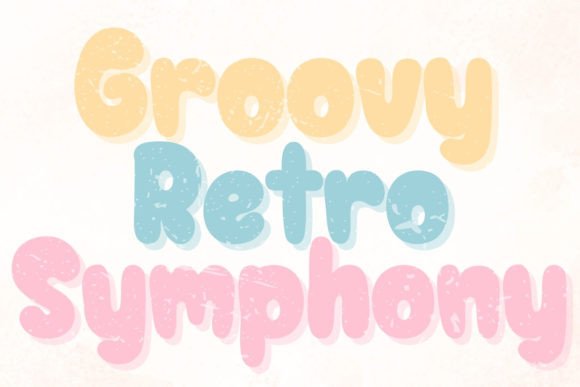
Groovy Retro Symphony is a meticulously crafted display typeface designed to capture the carefree elegance of mid-20th-century design sensibilities — think 1960s album art, vintage café menus, hand-painted signage, and sun-drenched summer postcards. Unlike rigid, machine-perfect fonts, Groovy Retro Symphony embraces organic imperfection: gentle inconsistencies in stroke weight, subtle variations in letter height, and graceful, flowing curves that mimic natural handwriting.
Each character is thoughtfully animated with personality — the lowercase “g” swirls like a ribbon caught in a breeze; the uppercase “S” leans forward with playful confidence; even punctuation marks carry a wink of whimsy. This isn’t just visual decoration — it’s intentional expressive typography, engineered to resonate emotionally while remaining highly legible at display sizes.
More Than Just “Retro”: A Thoughtful Design Philosophy
Many fonts labeled “retro” rely solely on surface-level tropes — bold serifs, exaggerated swashes, or heavy shadows. Groovy Retro Symphony rises above trend-chasing by grounding its aesthetic in authenticity. Its designers studied original lettering from analog sources: chalkboard signs from roadside diners, inked illustrations in 1950s children’s books, and hand-lettered posters from jazz festivals. The result? A font that feels lived-in, not recycled.
This distinction matters — especially for creators who value integrity alongside aesthetics. When you choose Groovy Retro Symphony, you’re not opting for nostalgia as costume. You’re choosing nostalgia as context: a visual language rooted in human warmth, tactile craft, and joyful spontaneity.
Why It Matters Today — Beyond Aesthetic Appeal
In an age dominated by sleek minimalism, algorithmic interfaces, and AI-generated uniformity, Groovy Retro Symphony serves a quiet but powerful purpose: human reconnection. It reminds us — and our audiences — that behind every brand, campaign, or creative project lies a person with taste, memory, and heart.
Practical Applications Across Industries
- Branding & Small Business: Cafés, boutiques, bakeries, and indie record stores use Groovy Retro Symphony for logos and packaging to signal approachability, authenticity, and local charm — without sounding kitschy.
- Educational Materials: Teachers incorporate it into classroom posters, reading charts, or student project templates to spark engagement — particularly with younger learners drawn to expressive, friendly letterforms.
- Digital Creativity: Social media designers apply it to Instagram story headers, Pinterest quote graphics, and email newsletter banners — where warmth and clarity must coexist in under three seconds.
- Wedding & Event Design: From save-the-date cards to menu inserts, the font brings romantic elegance and lighthearted sophistication — striking a balance between timeless and tender.
Importantly, Groovy Retro Symphony performs exceptionally well in responsive environments when used appropriately (e.g., large headings, hero text, or short quotes). Its generous x-height and open counters ensure readability across devices — a crucial consideration often overlooked in decorative fonts.
Dispelling Common Misconceptions
Myth #1: “It’s only for vintage-themed projects.”
Not true. While Groovy Retro Symphony shines in retro contexts, its versatility lies in contrast. Pair it with clean sans-serifs like Inter or Lato for modern editorial layouts — the juxtaposition creates visual interest and hierarchy without sacrificing professionalism.
Myth #2: “Handwritten-style fonts lack accessibility.”
Groovy Retro Symphony was developed with accessibility in mind. Its letterforms avoid ambiguous shapes (e.g., no confusing “I”/“l”/“1” similarities), maintain ample spacing, and support full Unicode character sets — including accented characters for multilingual use. Always pair it with accessible body text and sufficient color contrast for WCAG compliance.
Myth #3: “It’s hard to use professionally — too ‘fun’ for serious work.”
Tone is contextual. A law firm wouldn’t use it for legal disclaimers — but it could beautifully headline a community outreach initiative or pro bono campaign. The key is intentionality: ask *what emotion do I want this message to carry?* If warmth, trust, and humanity are part of your answer, Groovy Retro Symphony may be the perfect voice.
How to Use Groovy Retro Symphony Effectively
Like any expressive tool, its impact multiplies with thoughtful application. Here’s how to get the most from it:
- Reserve it for emphasis: Use it for headlines, pull quotes, logos, or call-to-action buttons — never for long paragraphs or dense UI labels.
- Pair wisely: Complement it with neutral, highly legible typefaces (e.g., Manrope, IBM Plex Sans, or Source Serif Pro) to create rhythm and balance.
- Adjust tracking intentionally: Slightly increased letter-spacing enhances its airy, breezy feel — especially at larger sizes.
- Test in real context: Preview how it renders on both light and dark backgrounds, and check legibility on mobile screens before finalizing designs.
A Note for Developers & Designers
Groovy Retro Symphony is available in multiple formats — including variable font files (.woff2) optimized for web performance. When self-hosting, leverage @font-face declarations with font-display: swap to prevent invisible text during loading. For platforms like Canva or Adobe Creative Cloud, it’s often pre-installed or available via integrated font libraries — always verify licensing terms for commercial use.
Connecting Past and Present — Why This Font Endures
Groovy Retro Symphony succeeds because it honors history without imitating it. It doesn’t replicate the limitations of old tools — shaky hands, uneven ink flow, or warped paper — but rather celebrates the intent behind them: to communicate joy, individuality, and connection.
In classrooms, it helps students see language as alive — not static symbols, but gestures with rhythm and breath. In marketing, it builds trust by signaling that a brand values craftsmanship over convenience. In personal projects — from zines to greeting cards — it empowers creators to say, “This matters enough to make it beautiful, by hand — even if digitally rendered.”
That’s the quiet revolution Groovy Retro Symphony represents: a return to meaning-centered design, where every curve tells a story, and every stroke invites pause, smile, and recognition.
Final Thoughts: Typography With Heart
Fonts are never neutral. They shape perception, influence mood, and silently reinforce values. Groovy Retro Symphony stands out not because it’s loud or flashy — but because it’s kind. Kind to memory. Kind to the eye. Kind to the creator who chooses it with purpose.
Whether you’re launching a new product, designing a child’s birthday invitation, or crafting a heartfelt newsletter, consider what emotional resonance you hope to leave behind. With Groovy Retro Symphony, you’re not just selecting a typeface — you’re conducting a small, joyful symphony of style, sincerity, and soul.
Ready to bring warmth and wonder to your next project? Explore Groovy Retro Symphony through trusted font marketplaces or licensed design platforms — and remember: the most memorable messages aren’t just read. They’re felt.