Let the Children Come to Me
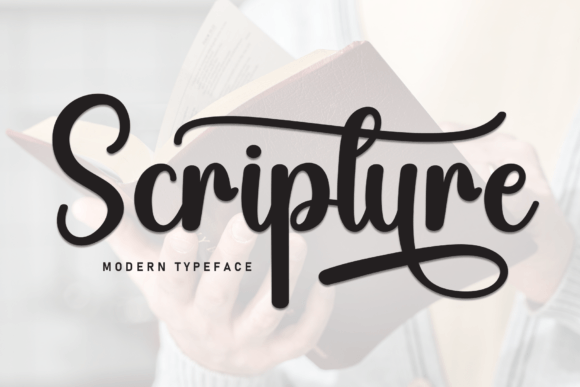
There’s a quiet power in handwriting—the tilt of a letter, the gentle swell of a curve, the slight hesitation before a flourish. It speaks before words do. Scripture is a carefully crafted handwritten font that captures that sincerity—not as imitation, but as intention. It doesn’t try to replicate calligraphy tools or mimic ink bleed; instead, it distills warmth, approachability, and joyful authenticity into every glyph. Designed with real pen movement in mind, Scripture feels like a friend’s note slipped under your door—not polished, not performative, but deeply human.
At its core, Scripture is a display script—optimized for impact at larger sizes—but its rhythm and spacing make it unusually legible even at modest point sizes (14–18pt). Unlike many playful fonts that sacrifice clarity for charm, Scripture maintains consistent x-height, open counters, and generous letter spacing. That means your wedding invitation won’t confuse “Emma” with “Emmy,” and your workshop handout stays scannable from across a room.
Why Handwritten Fonts Still Matter—Especially Now
In an age of algorithmic feeds and templated interfaces, people respond instinctively to signals of care and individuality. A handwritten font like Scripture isn’t just decorative—it’s communicative shorthand. It says: This was made for you. Not mass-produced. Not automated. Thoughtfully chosen. Research in behavioral design shows that perceived effort correlates strongly with perceived value—and Scripture delivers that impression without demanding extra production time.
Where Scripture Fits Naturally
It shines where personality and purpose align:
- Wedding & Event Design: From save-the-dates to seating charts, Scripture adds intimacy without pretense. Try pairing it with a clean sans-serif (like Inter or Lato) for body text—Scripture handles headlines, names, and short quotes beautifully.
- Educational Materials: Teachers use Scripture in classroom posters, student award certificates, or weekly newsletters. Its friendly weight helps reduce cognitive load for younger readers while still feeling mature enough for middle school science fair banners.
- Small Business Branding: Cafés, boutiques, and wellness studios find Scripture works especially well on chalkboard menus, packaging labels, or Instagram story highlights. It conveys craft and care—key differentiators in saturated markets.
- Digital Interfaces: Yes—even there. Used sparingly in hero sections, email headers, or CTA buttons, Scripture increases visual contrast and emotional resonance. Just avoid long paragraphs or small UI elements; it’s a voice, not a narrator.
A Note on Legibility vs. Likability
Not all charming fonts earn trust. Some prioritize whimsy over function—tight kerning, exaggerated swashes, or inconsistent stroke weights can undermine credibility, especially in professional or faith-based contexts. Scripture avoids those pitfalls. Its lowercase “a” and “g” are single-story (no confusing loops), its “t” has a subtle crossbar—not a dramatic swoop—and numerals are tabular and aligned. That attention to detail means it reads clearly on mobile screens, prints crisply on recycled paper, and holds up when converted to SVG for web use.
Real-World Considerations Before You Use It
Like any tool, Scripture performs best when matched to context—not just aesthetics.
- Licensing matters. Scripture is available under both personal and commercial licenses. If you’re designing for a client—even a nonprofit—or embedding it in a SaaS dashboard, verify the license covers your use case. Free versions often lack full character sets (no accented characters, no OpenType features), which limits global usability.
- Pairing is non-negotiable. Scripture thrives alongside neutral, well-proportioned typefaces. Avoid other scripts or overly decorative serifs—they compete rather than complement. A light-weight geometric sans (e.g., Poppins Light) or a warm humanist serif (e.g., Merriweather) creates balance and hierarchy.
- Test before you commit. Print a sample at actual size. View it on both iOS and Android devices. Ask someone unfamiliar with your project to read a line aloud. If they pause or misread, adjust tracking or switch to a bolder weight—Scripture offers multiple optical weights for this reason.
- Respect cultural nuance. While Scripture’s tone is universally warm, consider audience expectations. In formal religious publishing or academic theology work, reserve it for section dividers or quote callouts—not body text or doctrinal statements. Its joy is inviting, not irreverent.
More Than Just a Font—A Tone Anchor
Designers often overlook how much tone is set before a single word is read. Scripture functions as a subtle but consistent tonal anchor: hopeful but grounded, tender but intentional, creative but clear. That’s why educators use it in Sunday school materials—to reflect Jesus’ invitation in Mark 10:14: “Let the little children come to me; do not stop them…” It doesn’t shout. It opens space. It leans in.
For freelancers juggling five clients a week, Scripture saves time—not by automating, but by eliminating second-guessing. When a client says, “Make it feel personal but professional,” Scripture is often the fastest, most reliable path to that balance. No mockups needed. No endless font comparisons. Just confident, cohesive expression.
One Final Thought: Tools Serve Truth
Fonts don’t carry meaning on their own—but they shape how meaning lands. Scripture doesn’t replace thoughtful writing or faithful communication. It supports it. Whether you’re designing a baptism announcement, a literacy program flyer, or a devotional app interface, the goal remains the same: clarity, kindness, and connection. Scripture helps you deliver all three—without a single extra syllable.
If your work invites people in—whether to celebrate, learn, grow, or rest—Scripture is worth keeping within easy reach. Not because it’s trendy, but because it’s true to its name: a quiet, steady vessel for what matters most.