More Pretty Font: A Practical Evaluation for Creative Projects
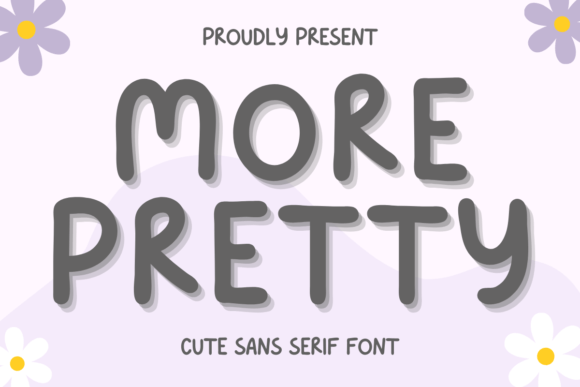
More Pretty is a handwritten-style typeface designed with soft, natural strokes and a gently feminine aesthetic. It features full character sets—including uppercase and lowercase letters, numerals, and standard punctuation—making it functionally complete for everyday use. Unlike some decorative fonts that sacrifice legibility for flair, More Pretty balances expressiveness with readability at moderate sizes, especially in print and digital layouts where visual warmth matters.
Who Might Consider More Pretty—and Why
Designers, educators, crafters, and hobbyists often seek fonts that convey personality without compromising utility. More Pretty appeals to those working on projects where tone and approachability are priorities—such as personal journals, bullet journal spreads, greeting cards, or social media graphics aimed at audiences that respond well to organic, hand-drawn aesthetics. Its playful rhythm and slight variation in stroke weight mimic authentic pen-on-paper writing, which can help humanize digital content or add tactile charm to physical products like stickers or apparel.
It’s also commonly used by small-business owners creating branded materials for wellness, lifestyle, or boutique retail niches—particularly when the brand voice emphasizes care, creativity, or calm. Because it supports common OpenType features (like basic ligatures in some versions), users can achieve subtle typographic refinement without needing advanced design software.
Practical Benefits and Realistic Expectations
One strength of More Pretty is its versatility across formats. It works well in Canva templates, Cricut Design Space, and desktop applications like Adobe Illustrator or Affinity Designer—especially when exported as OTF or TTF files. Its consistent spacing and clear letterforms make it suitable for short-form text: quotes, headings, planner headers, or product labels. For example, using More Pretty for a weekly gratitude list or a tea shop’s menu board adds cohesion and gentle visual interest.
However, expectations should be calibrated. As a handwritten font, More Pretty is not optimized for long paragraphs or dense body copy. Its irregular baseline and variable stroke thickness reduce scanning efficiency in extended reading contexts. It also lacks extensive language support beyond basic Latin characters—so multilingual projects requiring accented characters or non-Latin scripts may encounter gaps.
Another consideration is licensing. While many versions are available under standard desktop or personal-use licenses, commercial applications—like selling printable planners or embedding the font in a web app—require careful review of the specific license terms. Some free downloads found online may not include full character sets or may restrict redistribution, so verifying source and permissions is essential before committing to large-scale use.
Where More Pretty Fits Best
More Pretty shines in contexts where brevity, personality, and visual harmony matter more than functional neutrality. It’s a strong match for:
- Planners and habit trackers — Its friendly appearance encourages engagement without feeling overly formal.
- Scrapbooking and sticker sheets — The natural flow complements photos, washi tape, and other tactile elements.
- Women’s apparel and accessories — Especially on cotton tees, tote bags, or enamel pins where a light, joyful tone aligns with the product’s identity.
- Social media quote graphics — Paired with muted backgrounds or soft photography, it enhances emotional resonance without competing for attention.
- Small-batch printed goods — Such as recipe cards, gift tags, or wedding stationery where hand-crafted authenticity is part of the value proposition.
When Alternatives May Be Worth Exploring
If your project prioritizes clarity over charm—or requires broader technical functionality—More Pretty may not be the optimal choice. For instance:
- Web interfaces or apps — Handwritten fonts often lack web-optimized hinting and variable weight options, making them less adaptable for responsive typography. A more neutral but still warm option like Quicksand or Nunito may offer better performance and accessibility.
- Branding systems needing scalability — Logos or mastheads benefit from fonts with strong recognition at small sizes; More Pretty’s delicate details can blur or disappear below 24px unless carefully tested.
- Projects requiring multiple weights or styles — Since More Pretty typically ships as a single weight, pairing it with a complementary sans-serif for contrast (e.g., Montserrat or Lato) is often necessary—not a drawback, but a planning step to anticipate.
- Educational or accessibility-focused materials — Readers with dyslexia or low vision may find highly stylized handwriting fonts harder to parse. In those cases, fonts designed with readability research in mind—like OpenDyslexic or Atkinson Hyperlegible—are more appropriate.
Making an Informed Choice
Choosing More Pretty isn’t about whether it’s “the best” font overall—it’s about whether its characteristics align with your specific goals, constraints, and audience. Before downloading or purchasing, ask yourself:
- What’s the primary role of the text? Is it decorative (a title, tagline, or accent) or functional (instructions, captions, data labels)?
- Where will it appear? Print, web, embroidery, or vinyl cut? Test rendering at intended size and medium—what looks charming on screen may not translate cleanly to fabric or foil stamping.
- What’s the scope of use? Will you need consistent styling across dozens of templates? Does the license allow for team access or resale of derivative designs?
- How does it pair with other elements? Try setting sample text alongside your chosen imagery, colors, and supporting typefaces. Does it enhance or distract?
Finally, consider prototyping early. Most designers preview fonts using free trials or specimen PDFs. If you’re evaluating More Pretty alongside similar options—like Brittany Signature, Cherry Swash, or Great Vibes—compare them side-by-side in your actual workflow environment. Differences in x-height, spacing, and character completeness become apparent only in context.
In summary, More Pretty is a thoughtful tool for creators who value expressive typography but understand its boundaries. It supports intentionality rather than convenience—best used where its personality adds meaning, not where it substitutes for structural clarity. When matched to the right purpose, it helps communicate warmth, individuality, and quiet confidence—without demanding attention it wasn’t designed to hold.