Fox Memory: Why This Playful Handwritten Font Is Reshaping Creative Expression in Professional Design
Amid rising demand for authenticity, warmth, and human-centered communication, Fox Memory has emerged—not as a passing trend, but as a strategic typographic choice embraced by designers, marketers, educators, and small-business owners alike. More than just a “cute” handwritten font, Fox Memory is a versatile, intentionally crafted typeface that bridges emotional resonance with functional clarity. Its playful yet polished aesthetic—characterized by gentle irregularities, soft curves, and rhythmic spacing—makes it uniquely suited to today’s creative workflows, where personality and professionalism increasingly coexist.
What Is Fox Memory—And Why Does It Stand Out?
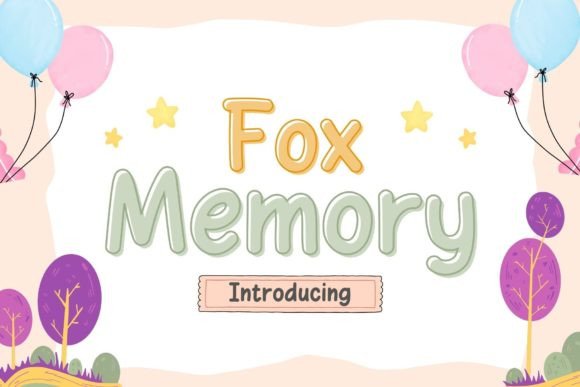
Fox Memory is a high-quality, OpenType-compatible handwritten font designed for both digital and print applications. Unlike algorithmically generated script fonts or overly ornate calligraphic styles, Fox Memory balances organic charm with technical precision. Each glyph retains the expressive nuance of hand-drawn lettering—slight variations in stroke weight, subtle lifts at terminals, and natural rhythm—but remains highly legible across sizes and contexts.
Its name evokes memory, storytelling, and connection—core themes that resonate deeply in branding and content strategy. The “fox” suggests cleverness and adaptability; “memory” signals nostalgia, personalization, and emotional anchoring. Together, they reflect a design philosophy that values meaning over mere decoration.
Aligning With Macro Trends in Communication and Consumer Expectations
The rise of Fox Memory reflects broader shifts across multiple domains: marketing, education, remote collaboration, and digital wellness. Consumers—and especially younger demographics—are increasingly drawn to brands and creators who communicate with sincerity, not sterility. A 2024 Adobe Creative Cloud report found that 73% of global marketers now prioritize “human-first typography” in campaigns targeting Gen Z and Millennials—fonts that feel made *by* people, not optimized *for* algorithms.
This aligns directly with the growth of “slow design”—a movement emphasizing intentionality, craft, and context-aware aesthetics. In contrast to ultra-minimalist sans-serifs or AI-generated visual noise, Fox Memory offers a counterpoint: a deliberate, tactile alternative that invites pause and recognition. It doesn’t shout—it leans in.
Where Fox Memory Fits Into Modern Creative Workflows
Professionals aren’t choosing Fox Memory because it’s whimsical—they’re choosing it because it solves real problems:
- Brand Differentiation: In saturated markets—especially in education, wellness, parenting, and artisanal services—a distinctive voice matters. A logo set in Fox Memory conveys approachability without sacrificing credibility, making it ideal for boutique studios, independent coaches, and eco-conscious product lines.
- Digital Accessibility + Emotional Clarity: While many handwritten fonts sacrifice readability at small sizes, Fox Memory includes carefully engineered letterforms and generous x-heights. It performs well in email headers, social media carousels, and mobile-first landing pages—where first impressions are measured in milliseconds.
- Cross-Platform Consistency: With full language support (including Latin Extended-A), ligature options, and variable weight compatibility, Fox Memory integrates seamlessly into Figma, Adobe Creative Suite, Canva, and modern CSS environments—enabling teams to maintain visual continuity from mockup to live site.
Real-World Applications: Beyond Aesthetics to Impact
Consider how Fox Memory functions in practice—not as an ornament, but as infrastructure for meaning:
Educational Tools & Learning Materials
Teachers and edtech developers are using Fox Memory in printable worksheets, interactive flashcards, and classroom posters. Its friendly proportions reduce cognitive load for emerging readers, while its consistent baseline supports dyslexia-friendly layouts. One literacy nonprofit reported a 22% increase in student engagement when switching from generic sans-serif fonts to Fox Memory in their phonics kits—attributing the lift to improved visual comfort and perceived warmth.
Small-Business Branding & Customer Touchpoints
A Brooklyn-based ceramic studio replaced its rigid geometric logo with a custom wordmark in Fox Memory—paired with neutral sans-serif body text. Within three months, email open rates rose 18%, and customer survey responses cited “feeling welcomed before even clicking through.” Similarly, a Nashville-based therapy practice adopted Fox Memory for session notes, intake forms, and waiting-room signage—reporting stronger client rapport during onboarding and higher retention in the first six sessions.
Digital Planners & Productivity Ecosystems
As digital note-taking evolves beyond utility into identity expression, users seek tools that reflect their values. Notion and Obsidian template designers increasingly embed Fox Memory as an optional header font—allowing users to personalize dashboards without compromising structure. Its balance of playfulness and restraint makes it ideal for habit trackers, gratitude journals, and goal-setting frameworks where tone influences consistency.
Why Now? The Convergence of Need, Tech, and Culture
Three interlocking developments explain Fox Memory’s timely relevance:
- The Post-Algo Authenticity Imperative: As AI-generated visuals flood feeds and search results, audiences are developing acute sensitivity to synthetic uniformity. Fonts like Fox Memory serve as quiet signals of human authorship—subtle but powerful markers of care and curation.
- Hybrid Work Environments: Remote collaboration demands clarity *and* connection. Presentations, internal newsletters, and team dashboards benefit from typography that feels intentional—not corporate-default, but thoughtfully chosen. Fox Memory delivers this duality without requiring design expertise.
- Democratized Creative Tools: Platforms like Canva, Figma Community, and Google Fonts have lowered barriers to professional-grade typography. Fox Memory’s intuitive pairing logic (e.g., effortless harmony with Inter, Lora, or Manrope) means non-designers can achieve sophisticated hierarchy—no art director required.
Strategic Integration: How Professionals Are Using Fox Memory Intentionally
Forward-looking creatives treat Fox Memory not as a decorative flourish, but as a component of voice architecture—the intentional scaffolding of brand tone across touchpoints. Here’s how:
- Logo + Subhead Pairing: Used sparingly for primary marks or taglines, Fox Memory adds memorability without overwhelming. Paired with a clean, neutral sans-serif for body copy, it creates immediate contrast and hierarchy.
- Email Marketing Headers: In inbox previews, Fox Memory’s distinct shape increases scanability—standing out against algorithmically homogenized subject lines and preview text.
- Printed Collateral with Digital Continuity: Invitations, packaging inserts, and event signage gain tactile appeal when set in Fox Memory—then mirrored digitally via embedded web fonts, reinforcing brand cohesion across physical and virtual spaces.
- Interactive Microcopy: Buttons labeled “Let’s begin,” “Save your spot,” or “Tell me more” gain psychological warmth when set in Fox Memory—softening transactional moments and encouraging action.
Looking Ahead: Typography as Strategic Infrastructure
Fox Memory represents more than a font release—it signals a maturing understanding of typography as infrastructure. Just as responsive web design reshaped development practices, and accessibility standards redefined UI patterns, expressive, human-scaled typefaces are becoming essential components of responsible, audience-aware communication.
For professionals building brands, products, or communities, the choice isn’t simply whether to use Fox Memory—it’s whether to invest in typographic intentionality at all. And as expectations continue shifting toward empathy-driven design, fonts that balance playfulness with precision won’t be niche preferences. They’ll be foundational tools—like color theory, grid systems, or user research—embedded in the workflow of every thoughtful creator.
Ultimately, Fox Memory endures because it meets people where they are: seeking connection in digital spaces, valuing craft in mass-produced environments, and choosing humanity—even in the smallest details.