Sweet Tooth: The Playful Handwritten Font That Brings Joy to Real Projects
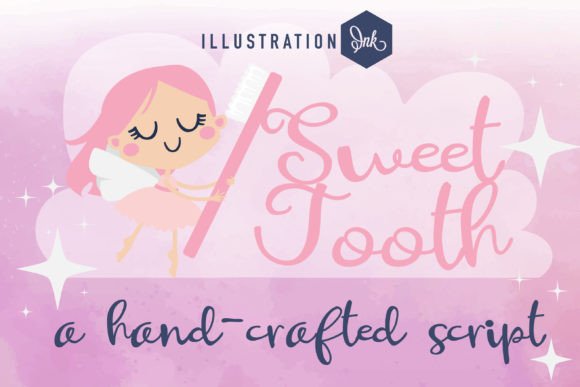
If you've ever spent too long scrolling through font libraries searching for something that feels alive—not stiff, not sterile, but full of bounce, warmth, and quiet personality—you’ve probably felt the pull of Sweet Tooth. It’s not just another handwritten font. Sweet Tooth is a hand-crafted typeface with curly uppercase letters, gentle swashes, and a cheerful, springy rhythm that makes even simple words feel like they’re smiling back at you.
Where Sweet Tooth Fits in the Real World
Sweet Tooth shines brightest when authenticity and emotional connection matter more than rigid formality. Think of it as the visual equivalent of a warm hug or a shared laugh—it doesn’t shout, but it lingers. Here’s where it naturally lands:
- Small business branding: A local bakery, handmade soap studio, or children’s book illustrator might use Sweet Tooth for their logo or packaging to signal approachability and care—not corporate polish, but human presence.
- Greeting cards and stationery: Whether it’s a birthday invite, baby announcement, or thank-you note, Sweet Tooth adds sincerity without trying too hard. Its whimsical style keeps things light and personal, especially when paired with soft watercolor backgrounds or textured paper scans.
- Instagram and social media graphics: Small creators—teachers, therapists, yoga instructors—often lean into Sweet Tooth for quote cards or event banners. Why? Because it reads as trustworthy *and* kind. Followers don’t just see text; they sense tone before reading a word.
- Educational materials for younger audiences: Teachers designing classroom posters or printable learning kits find Sweet Tooth helps reduce visual intimidation. Letters with friendly curves and open counters (like the inside of an “a” or “e”) support early letter recognition—and make spelling practice feel less like work.
Who Benefits Most—and How
Sweet Tooth isn’t one-size-fits-all—but it’s remarkably versatile across roles and needs.
Creative freelancers often reach for Sweet Tooth when clients ask for “something joyful but not childish.” It bridges the gap between playful and professional: perfect for rebranding a wellness coach who wants to soften her image, or updating a nonprofit’s donor newsletter to feel more personal and grounded.
Non-designers (think small shop owners, Etsy sellers, or church volunteers) appreciate how easily Sweet Tooth integrates into Canva or Google Slides. You don’t need typography training to know that “Welcome to Story Time!” looks friendlier in Sweet Tooth than in Arial—and that subtle shift builds trust faster than any tagline.
Designers working with neurodiverse audiences sometimes choose Sweet Tooth intentionally. Its consistent stroke weight and generous spacing help reduce visual crowding—a small but meaningful detail for readers who experience sensory overload or dyslexia-related fatigue. It’s not a substitute for accessibility tools, but it’s a thoughtful layer in inclusive design.
What to Keep in Mind Before You Use It
Like any expressive font, Sweet Tooth works best when matched thoughtfully to context—not just aesthetics.
Legibility at small sizes is its gentlest limitation. At under 16px on screen or below 10pt in print, some of its curls and fine details start to blur. Reserve it for headlines, short quotes, logos, or display text—not body copy, captions, or dense infographics. If your project needs both personality *and* readability at scale, pair Sweet Tooth with a clean sans-serif (like Poppins or Inter) for supporting text.
Brand consistency matters. Because Sweet Tooth carries such strong emotional resonance, using it inconsistently can dilute impact. For example, slapping it onto a law firm’s website header while keeping everything else in Times New Roman sends mixed signals. But using it across all customer-facing touchpoints—email headers, product tags, even voicemail greetings (“Hi, you’ve reached [Business Name]—we’ll be right back!”)—creates cohesion and warmth.
License clarity is non-negotiable. Sweet Tooth is a commercial font, and while many foundries offer personal-use licenses for free, full usage rights (especially for client work or digital products) usually require purchase. Always check the license terms before embedding it in a Shopify theme or exporting a PDF for print-on-demand. Skipping this step risks takedowns—or worse, legal notices down the line.
When Sweet Tooth Might Not Be the Right Choice
It’s okay—and smart—to say no. Sweet Tooth isn’t ideal for:
- Corporate annual reports or investor decks where gravitas and neutrality are priorities.
- Wayfinding signage or safety instructions where speed and clarity trump charm.
- Projects targeting audiences who associate highly decorative fonts with unprofessionalism (some B2B tech or finance clients, for instance).
- Long-form editorial content—its personality shines brightest in bursts, not paragraphs.
Practical Pairings That Work Well
Fonts rarely live alone—and Sweet Tooth plays nicely with others. Try these combos for balanced contrast:
- Sweet Tooth + Inter: Clean, modern, and highly legible. Ideal for websites where the headline says “We’re here to help” and the body text explains exactly how.
- Sweet Tooth + Merriweather: A gentle serif pairing that adds quiet authority without stiffness—great for blogs, newsletters, or printed workshop guides.
- Sweet Tooth + Montserrat: Bold and geometric, this duo gives playful energy structure. Works well for event posters or product launch graphics where you want vibrancy *and* clarity.
You’ll know Sweet Tooth is working when people pause—not because the design is flashy, but because it feels like it was made *for them*. Not mass-produced. Not algorithm-optimized. Just quietly, warmly, human.
That’s the real strength of a hand-crafted font like Sweet Tooth: it doesn’t try to be everything. It simply shows up with joy, ready to make ordinary moments feel a little more seen.