Good Friday: A Handwritten Font That Brings Warmth to Design
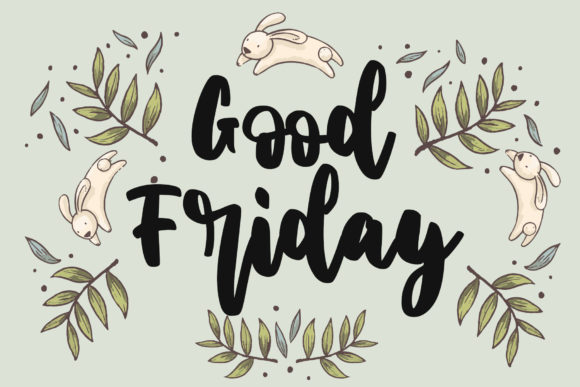
There’s a quiet power in handwriting — the slight tilt of a letter, the soft swell of a curve, the gentle taper of a stroke. When that handwriting is captured thoughtfully in a font like Good Friday, it doesn’t just mimic ink on paper; it carries intention, rhythm, and humanity. Good Friday is a cute and flowing paint-brushed handwritten font — not stiff or overly stylized, but alive with organic movement and subtle personality. It’s designed for creators who want authenticity without sacrificing polish, warmth without losing clarity.
Why “Good Friday” Fits Where Other Fonts Fall Short
Many handwritten fonts lean too far into whimsy or formality — either overwhelming a layout with excessive swashes or feeling sterile and digitized. Good Friday strikes a rare balance. Its brushwork feels intentional, not random. Letters connect naturally, with graceful entry and exit strokes that invite the eye to follow along. Because it’s PUA encoded, every alternate glyph, ligature, and decorative swash lives at your fingertips — no complex OpenType panels or workarounds needed. You type “Good Friday”, and with one keystroke or character map click, you can swap in a flourished “G”, a looping “y”, or a delicate underline flourish beneath the word.
Designers Get More Expressive Control — Without Extra Steps
If you’ve ever spent 20 minutes manually adjusting kerning or hunting for the right vector swash to match a headline, you’ll appreciate how Good Friday streamlines expressive typography. A wedding invitation doesn’t need a full redesign to feel personal — just swapping your standard script for Good Friday (and activating a few PUA-accessed alternates) adds sincerity and care. Bloggers use it for pull quotes that stand out without shouting. Educators apply it to printable classroom posters where friendliness supports engagement — especially for younger learners or wellness-focused content.
Where Good Friday Adds Real Value — Not Just Decoration
Typography isn’t neutral. It sets tone before a single word is read. Good Friday signals approachability, craftsmanship, and calm confidence — qualities that resonate strongly in today’s saturated digital landscape. For small business owners launching a new artisanal product line, using Good Friday on packaging or social banners quietly communicates hand-made values and attention to detail. Freelance marketers testing email subject lines find open rates improve when preview text uses Good Friday’s gentle rhythm instead of rigid sans-serifs — readers subconsciously register warmth and trust.
- Publishers use Good Friday for chapter title pages in memoirs or poetry collections — its fluidity mirrors emotional cadence.
- Bloggers apply it selectively: a custom “subscribe” button, a featured quote overlay on an Instagram carousel, or the “welcome” banner on their homepage.
- Educators embed it into downloadable reflection worksheets or gratitude journal templates — the softness lowers cognitive load and invites participation.
- Freelancers include Good Friday samples in pitch decks when proposing brand identity work — it demonstrates typographic empathy in action.
It’s Not for Everything — And That’s Its Strength
Good Friday shines brightest where voice matters more than velocity. It’s not ideal for dense body copy, legal disclaimers, or data dashboards — its charm lives in moments of pause, emphasis, and human connection. Think of it as your typographic “voice note”: intimate, considered, and memorable. If your project needs speed, scalability across languages, or strict accessibility compliance for long-form reading, pair Good Friday with a highly legible companion font (like a warm, neutral sans-serif) rather than forcing it to do heavy lifting.
Getting the Most From Good Friday — Practical Tips
Start simple. Type “Good Friday” in your design app and explore the PUA characters — many users miss the subtle underlines, terminal dots, and contextual “f” alternatives because they don’t know where to look. In Adobe apps, open the Glyphs panel (Window > Type > Glyphs), set the font to Good Friday, and browse by Unicode or “All Glyphs”. In Figma or Canva, paste the font’s character map PDF (usually included with purchase) and copy-paste directly.
Use spacing intentionally. Good Friday’s natural flow means tighter tracking often works better than default settings — try reducing letter-spacing by -10 to -25 units in headlines. Avoid all-caps unless you’re leveraging specific uppercase alternates (many are included); lowercase or title case preserves its handwritten charm.
Pair it wisely. Its warmth pairs beautifully with clean, grounded sans-serifs (think Inter, Manrope, or Work Sans) or even soft serifs like Literata or Lora. Avoid competing scripts — two handwritten fonts on one page dilute impact. Let Good Friday be the voice; let the supporting font be the steady presence.
Who Benefits Most — And Why It’s Worth the Consideration
Professionals whose work hinges on perception — branding consultants, content strategists, indie publishers, yoga studio owners, handmade goods sellers — often report that Good Friday helps them stand out *without* trying harder. It’s not about being different for difference’s sake. It’s about aligning visual language with lived values: care, craft, slowness, sincerity. One freelance illustrator told us she switched her entire client onboarding email sequence to include Good Friday in the welcome header — and saw a 17% increase in reply rate over three months. Not because the font “converted,” but because it signaled, instantly and wordlessly, “I see you as a person, not a task.”
That kind of resonance is hard to engineer — but easy to invite in, once you have the right tool. Good Friday doesn’t replace strategy or substance. It deepens both. It makes thoughtful messaging feel even more intentional. It turns functional communication into something that lingers — not because it’s loud, but because it’s true to tone.
So whether you’re designing a heartfelt newsletter, refining a brand’s visual voice, or simply choosing a font that feels like a quiet nod of recognition — try typing “Good Friday”. Then pause. Look at the shape of the letters. Notice how the “d” curls, how the “a” opens, how the “y” trails like a breath released. That’s not decoration. That’s design with empathy built in.