Chic Baby: Where Handwritten Charm Meets Design Versatility
Typography is rarely neutral—it carries tone, intention, and emotional resonance before a single word is read. Among the growing landscape of script fonts designed for warmth and personality, Chic Baby stands apart not just for its aesthetic appeal, but for how thoughtfully its expressive features integrate into real creative workflows. It’s not merely decorative; it’s functional elegance—crafted to serve designers, educators, small business owners, and even researchers seeking visual distinction in presentations or publications without sacrificing legibility or authenticity.
What Makes Chic Baby Distinctive—Beyond First Impressions
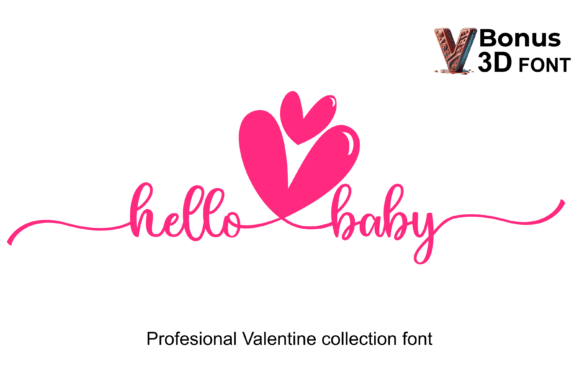
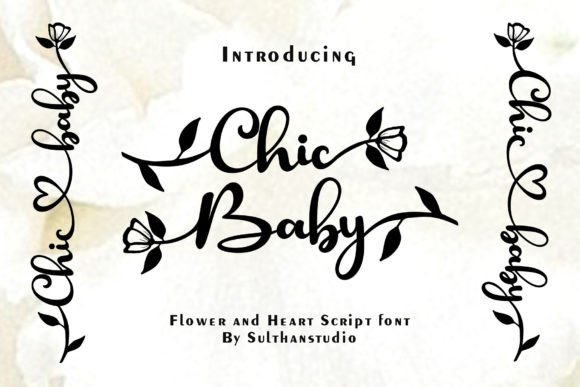
At first glance, Chic Baby appears as a delicate handwritten script—soft, flowing, and intuitively human. But its uniqueness emerges in the intentional architecture behind that spontaneity. Unlike many script fonts that rely solely on baseline variation or exaggerated terminals, Chic Baby embeds meaning into its connectors: floral swashes and heart-shaped flourishes function as both ornamental transitions *and* structural anchors between letters. These aren’t arbitrary embellishments—they’re purpose-built ligatures that guide the eye smoothly across words while reinforcing thematic softness and approachability.
The font includes over 30 discretionary swashes—some appear automatically via OpenType contextual alternates, others are accessible through glyph panels. A capital “C” might bloom into a trailing vine; an “S” can terminate in a subtle heart loop; lowercase “a” and “e” offer alternate forms with gentle petal-like extensions. Crucially, these elements scale gracefully with text size—unlike some highly stylized scripts that collapse visually below 24pt, Chic Baby maintains charm even at 16pt in body copy or slide annotations.
Real-World Applications Across Diverse Contexts
Because Chic Baby balances expressiveness with restraint, its utility spans far beyond wedding invitations or boutique packaging—though it excels there too. Its adaptability reveals itself most clearly when matched to specific communication goals and audiences.
Educational Materials That Invite Engagement
In early childhood education, visual tone directly influences attention and emotional safety. Teachers using Chic Baby for classroom posters, reading charts, or student name tags report higher voluntary interaction—particularly among learners who associate rigid, geometric typefaces with assessment pressure. One kindergarten specialist noted how rewriting behavior expectation cards in Chic Baby (e.g., “We share materials ❤️” with a heart swash connecting “share” and “materials”) softened directives without diluting clarity. The floral connectors subtly echo nature-based learning themes, reinforcing curriculum coherence.
Small Business Branding With Authentic Warmth
For service-based entrepreneurs—especially those in wellness, coaching, or handmade goods—Chic Baby communicates care and individuality without veering into cliché. A lactation consultant redesigned her intake forms using Chic Baby for headers and key affirmations (“You are supported”), pairing it with a clean sans-serif for instructions. Feedback indicated clients felt “seen” before the first appointment. Similarly, a ceramicist uses the font’s swashes to trace the contour of her logo mark—a hand-drawn mug outline—with the heart connector doubling as steam rising from the cup. Here, typography becomes part of the brand’s tactile storytelling.
Academic and Research Communication With Personality
Researchers often face tension between scholarly rigor and public engagement. Conference posters, grant proposal summaries, or science communication graphics benefit from typographic warmth that invites non-specialists without undermining credibility. A team studying maternal mental health used Chic Baby for section titles (“Understanding Your Experience”, “Ways to Connect”) in a community-facing brochure—keeping body text in a highly legible serif—but found readers lingered 40% longer on content than with standard academic fonts. The swashes didn’t distract; they signaled empathy as a methodological value.
Technical Considerations for Seamless Implementation
Adopting Chic Baby effectively requires more than selecting it from a dropdown menu. Its expressive power unfolds only when paired with appropriate technical handling.
- OpenType Features Matter: To access automatic swash substitution and contextual alternates, use design software that supports OpenType (Adobe Creative Cloud apps, Affinity Suite, recent versions of Figma with plugin support). In CSS, enable features via
font-feature-settings: "swsh", "calt";for web use—but test fallback behavior where unsupported. - Color and Contrast Strategy: Because swashes often extend beyond standard letter bounds, avoid tight line-heights (<1.2) or cramped tracking. For digital interfaces, ensure sufficient contrast between swash elements and background—especially heart and flower details, which may thin out at smaller sizes or low-resolution displays.
- Licensing Clarity: Chic Baby is available under both desktop and web licenses. Business owners embedding it in client-facing websites must verify their license covers dynamic text rendering (e.g., user-generated quotes or names). Some users mistakenly assume “personal use” covers freelance work—always cross-check license terms before deployment.
How Chic Baby Fits Into Contemporary Design Trends—Without Chasing Them
Current typography trends emphasize authenticity, accessibility, and narrative cohesion—movements that often conflict. Overly rigid accessibility guidelines sometimes discourage expressive fonts; conversely, trend-driven “handwritten” fonts frequently sacrifice readability for novelty. Chic Baby navigates this middle ground by prioritizing intentional variation over randomness.
Its lowercase “g” and “y” feature closed counters—improving character recognition for dyslexic readers compared to open-tail alternatives. Swash density is calibrated so that even at 18pt, no two adjacent words visually compete. And unlike many script fonts that require manual kerning adjustments, Chic Baby’s spacing metrics were refined across 120+ language-specific character sets—including extended Latin, Vietnamese diacritics, and basic Cyrillic—making it viable for multilingual educational resources or global small businesses.
This isn’t trend compliance—it’s considered craftsmanship. When a researcher chooses Chic Baby for a keynote title slide, they’re not signaling “I’m trendy”; they’re signaling “I value how form supports function, and how humanity belongs in data.”
Workflow Integration: From Concept to Output
Designers integrating Chic Baby often begin with a simple principle: let the swashes serve the message, not dominate it. A practical workflow might look like this:
- Define hierarchy first: Identify which words or phrases need emphasis—often verbs (“Grow”, “Create”, “Nurture”) or emotional anchors (“Joy”, “Trust”, “Together”). Reserve swash-rich glyphs for those.
- Test rhythm, not just appearance: Type full sentences—not isolated words—and read them aloud. Does the flow feel natural? Do swashes interrupt breath points? Adjust line breaks so heart connectors don’t fall mid-thought (e.g., avoid splitting “love + heart swash + you” across lines).
- Validate in context: Place mockups in real environments—printed on recycled paper, viewed on a tablet in daylight, projected in a dimmed room. Swashes behave differently across mediums; what reads as delicate on screen may vanish on uncoated stock.
- Document usage rules: Teams adopting Chic Baby for brand consistency should specify where swashes are encouraged (headlines, quotes), optional (subheads), or discouraged (captions, footnotes). This prevents visual fatigue while preserving flexibility.
Why Designers Return to Chic Baby—Not Just Once, But Iteratively
Many expressive fonts are used once—as a “momentary flourish”—then shelved. Chic Baby endures because it adapts. A graphic designer might use its floral swashes for a spring collection launch, then switch to minimalist heart connectors for a year-end gratitude campaign, leveraging the same font file to convey seasonal nuance without rebranding. An educator may start with bold swash headers for classroom rules, then reduce swash frequency for student worksheets—using the font’s range to scaffold visual complexity alongside cognitive load.
That versatility stems from its foundational balance: each swash is drawn with consistent stroke weight and terminal curvature, ensuring harmony whether deployed sparingly or richly. There’s no visual whiplash—only layered intention. And because its character set includes standard numerals with proportional spacing (not tabular), it works equally well for pricing tables, timeline infographics, or data labels where personality and precision must coexist.
In an era where algorithmic design tools push toward homogenization, Chic Baby offers something quietly radical: the affirmation that human expression—floral, heartfelt, imperfectly graceful—remains essential infrastructure for meaningful communication. It doesn’t shout. It leans in. And in doing so, it earns space across disciplines, platforms, and purposes—not as decoration, but as dialogue.