Hearth Stone: The Elegant Handwritten Font Redefining Modern Brand Expression
Amid a digital landscape saturated with geometric sans-serifs and algorithmically optimized typefaces, a quiet but powerful shift is underway—one rooted in authenticity, tactility, and human intention. At the heart of this movement is Hearth Stone, an elegant calligraphy font that bridges tradition and contemporary design sensibility. More than just a typeface, Hearth Stone represents a deliberate response to evolving creative expectations—where warmth, distinction, and emotional resonance are no longer optional enhancements but essential components of effective visual communication.
A Typeface Born from Intention, Not Algorithm
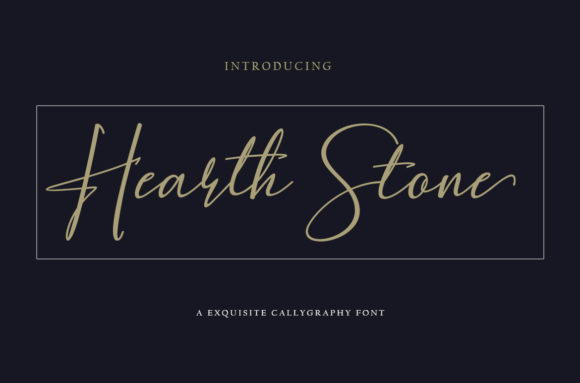
Hearth Stone is a modern handwritten font designed with precision and artistry. Its strokes carry the subtle variation of a practiced hand—slight tapering, organic contrast, and graceful entry/exit flourishes—yet it maintains exceptional legibility and typographic harmony across sizes and mediums. Unlike AI-generated script fonts that often lack structural coherence or contextual adaptability, Hearth Stone was crafted with real-world application in mind: from high-resolution print to responsive web interfaces, from embossed wedding stationery to laser-etched ceramic mugs.
What sets Hearth Stone apart isn’t just its aesthetic—it’s its behavior. Each glyph has been carefully kerned and spaced to ensure rhythm and flow in extended text, while its OpenType features support stylistic alternates, ligatures, and contextual swashes that elevate short-form applications like quotes, logos, or social media headers. This balance of elegance and utility makes it uniquely suited for professionals who need expressive typography without sacrificing functionality.
Why Designers and Brands Are Turning to Handwritten Elegance
The resurgence of handwritten and calligraphic type isn’t nostalgia—it’s necessity. As consumers grow increasingly skeptical of polished, homogenized branding, they’re responding more strongly to signals of craft, care, and individuality. A 2023 Adobe Creative Trends Report noted a 68% year-over-year increase in projects using “humanist script” fonts in premium lifestyle and service-based branding—from boutique wellness studios to independent financial advisors. These audiences don’t just want to be sold to; they want to feel seen, understood, and invited into a narrative.
Hearth Stone answers that need precisely. Its modern handwritten style conveys approachability without informality, luxury without aloofness. Consider a small-batch skincare brand launching a limited-edition line: pairing Hearth Stone with uncoated paper stock and soft-touch foil stamping creates a multisensory experience that communicates values—thoughtfulness, heritage, restraint—before a single word is read. Similarly, a freelance strategist might use Hearth Stone for her business card’s tagline (“Clarity, crafted with care”) to subtly reinforce her promise of personalized, human-centered guidance—distinct from the templated efficiency of corporate consultants.
Where Hearth Stone Fits Across Real-World Applications
Hearth Stone thrives where personality and permanence intersect. Its versatility isn’t theoretical—it’s validated across disciplines:
- Branding & Identity: Used as a secondary or accent typeface, Hearth Stone adds tonal depth to minimalist logotypes—think a clean sans-serif primary mark paired with Hearth Stone for the tagline or sub-brand name. It avoids cliché while delivering instant warmth.
- Wedding & Event Design: Beyond invitations, Hearth Stone shines on signage, menu cards, and vow books—its natural rhythm echoing the cadence of spoken promises. Designers report higher client satisfaction when Hearth Stone replaces overused script fonts, citing its “timeless but not dated” quality.
- Publishing & Editorial: In lifestyle magazines and premium newsletters, Hearth Stone anchors pull quotes and section headers, creating visual breathing room amid dense layouts. Its generous x-height ensures readability even at smaller sizes on screen.
- Product Packaging & Merchandise: From ceramic mugs to linen tote bags, Hearth Stone translates beautifully to physical substrates. Its stroke weight holds up under screen printing and embroidery, making it a pragmatic choice—not just a pretty one.
- Digital Presence: With variable font support and robust webfont optimization, Hearth Stone performs reliably in CSS
@font-facedeclarations. When used judiciously (e.g., hero headings or CTA buttons), it enhances perceived brand value without compromising load time or accessibility.
Meeting Evolving Workflow and Expectations
Today’s creators operate in hybrid environments—juggling Figma prototypes, Canva templates, client feedback loops, and multi-platform delivery. Hearth Stone was built for this reality. Its consistent metrics, intuitive character set, and cross-platform compatibility reduce friction in collaborative workflows. Designers no longer need to manually adjust letter spacing for every headline or convert text to outlines before handing off to developers. That reliability translates directly into saved hours—and fewer revision rounds.
Moreover, Hearth Stone aligns with growing ethical and experiential expectations. Consumers increasingly favor brands that signal intentionality—not just in messaging, but in material choices and visual language. A font like Hearth Stone, which implies handcraft without requiring actual hand-lettering, allows small businesses and solopreneurs to project artisanal credibility at scale. It democratizes a certain kind of sophistication—one previously reserved for studios with dedicated lettering artists.
Looking Ahead: Typography as Strategic Differentiation
As AI tools accelerate the production of generic visual assets, the strategic value of intentional typography only increases. Algorithms can replicate layout, color palettes, and even basic illustration—but they struggle to replicate the nuanced decision-making embedded in a thoughtfully designed typeface like Hearth Stone. Its subtle irregularities, its balance of confidence and humility, its quiet authority—these aren’t bugs to be smoothed out. They’re features that communicate humanity in an increasingly automated world.
This doesn’t mean Hearth Stone is a replacement for system fonts or functional workhorses. Rather, it occupies a vital niche: the expressive anchor point in a balanced typographic hierarchy. Forward-looking marketers understand that consistency isn’t about uniformity—it’s about coherence across touchpoints. Using Hearth Stone for voice-driven elements (testimonials, mission statements, founder notes) while relying on highly legible sans-serifs for body copy creates a layered, memorable identity system.
Entrepreneurs launching direct-to-consumer brands, freelancers building personal equity through visual storytelling, and agencies crafting bespoke experiences—all benefit from having a tool like Hearth Stone in their kit. It’s not merely decorative; it’s declarative. Every use says: This matters. You matter. This was made with attention.
Final Thought: Choosing Type Is Choosing Tone
In an era where attention is fragmented and trust is earned incrementally, typography remains one of the most accessible yet underleveraged levers for connection. Hearth Stone doesn’t shout. It leans in. It invites closer reading, slower engagement, and deeper association. It reflects a broader cultural pivot—from optimization at all costs toward resonance with purpose.
For professionals who understand that design is never neutral—and that every pixel, curve, and space carries meaning—Hearth Stone offers more than elegance. It offers clarity of intent. And in a crowded, fast-moving creative economy, that clarity isn’t just valuable. It’s indispensable.