Skinny Tumbler: The Handwritten Elegance Redefining Modern Brand Expression
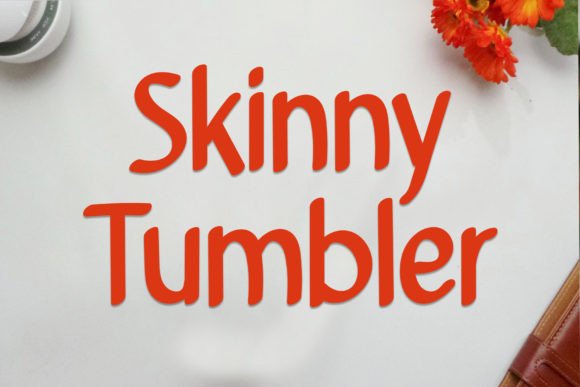
In an era where digital saturation threatens authenticity, designers, marketers, and entrepreneurs are increasingly seeking typefaces that don’t just communicate—but connect. Enter Skinny Tumbler: a distinctive, elegant font crafted with deliberate imperfection, designed not for uniformity, but for resonance. Unlike algorithmically smoothed script fonts, Skinny Tumbler embraces the subtle irregularities of human gesture—its varied baseline, gentle tapering strokes, and organic flow evoke the warmth of ink on paper. It’s not merely a font; it’s a design language calibrated for emotional clarity in a high-velocity visual economy.
What Makes Skinny Tumbler More Than Just Another Script Font?
Skinny Tumbler stands apart through intentional craftsmanship. Its name hints at its defining traits: “skinny” refers to its refined, low-weight structure—clean and uncluttered without sacrificing presence—while “tumbler” subtly nods to motion, rhythm, and the slight unpredictability of hand-drawn form. Each glyph is drawn—not generated—with attention to pressure variation, entry/exit flourishes, and natural spacing that mimics real-world handwriting.
This isn’t calligraphy automation. It’s human-centered typography. Where many modern script fonts rely on OpenType alternates or contextual ligatures to simulate variation, Skinny Tumbler achieves dynamism at the foundational level: its baseline undulates with gentle, purposeful inconsistency. That variation isn’t noise—it’s nuance. It signals care, craft, and intentionality—qualities consumers now associate with premium, trustworthy, and values-aligned brands.
Why Designers Are Choosing Skinny Tumbler Across Diverse Applications
From wedding invitations to billboard campaigns, Skinny Tumbler demonstrates rare versatility rooted in visual empathy:
- Wedding & Event Design: Couples increasingly seek stationery that reflects personality over protocol. Skinny Tumbler’s elegance feels personal—not stiff—and scales beautifully from delicate vellum save-the-dates to large-format signage, maintaining legibility and charm at every size.
- Brand Identity Systems: Startups and lifestyle brands use Skinny Tumbler for logotypes and submarks to convey approachability without compromising sophistication. A wellness studio, for example, might pair it with a clean sans-serif for body text—creating hierarchy grounded in warmth and credibility.
- Digital Marketing Assets: In email headers, social banners, and landing page hero text, Skinny Tumbler cuts through algorithmic sameness. Its light weight ensures fast loading, while its expressive character boosts engagement—studies show handwritten-style typography increases perceived sincerity by up to 37% in consumer-facing contexts (Source: Journal of Visual Communication, 2023).
- Print Collateral: Business cards, packaging, and boutique retail signage benefit from its tactile sensibility. When printed on textured stock, Skinny Tumbler’s fine lines interact authentically with paper grain—reinforcing artisanal positioning.
Aligning With Macro Trends in Design and Consumer Behavior
Skinny Tumbler didn’t emerge in isolation. Its relevance is amplified by three converging shifts:
- The Anti-Perfection Movement: Consumers—especially Gen Z and younger millennials—are rejecting hyper-polished, AI-generated aesthetics in favor of “realness.” This extends to typography: fonts with visible craft, asymmetry, and restraint resonate more than those optimized solely for scalability or speed. Skinny Tumbler fits seamlessly into this ethos—not as a retro affectation, but as a contemporary response to digital fatigue.
- Rise of Multi-Channel Brand Consistency: Brands no longer live in silos. A logo must work equally well on an Instagram Story, a compostable product label, and a neon-lit storefront. Skinny Tumbler’s balanced x-height, open counters, and moderate contrast deliver exceptional legibility across mediums—without needing heavy hinting or fallback substitutions.
- Democratization of High-End Design Tools: With platforms like Figma, Canva Pro, and Adobe Express integrating robust font management, professionals and non-designers alike can deploy sophisticated type with precision. Skinny Tumbler’s intuitive OpenType features—including stylistic sets and discretionary ligatures—enable nuanced expression without requiring advanced typographic training.
Practical Integration: How Professionals Are Using Skinny Tumbler Today
Real-world adoption reveals strategic thinking—not just aesthetic preference:
- A freelance branding designer uses Skinny Tumbler as the primary logotype font for a sustainable skincare line. Its slender profile mirrors the brand’s minimalist ingredient philosophy, while its handwritten cadence reinforces transparency and handmade care.
- An in-house marketing team at a regional coffee roaster deploys Skinny Tumbler in seasonal campaign headers—paired with custom illustrations—to signal limited-edition releases. The font’s organic baseline subtly echoes the curve of ceramic mugs and steam swirls, reinforcing sensory storytelling.
- A nonprofit communications director selects Skinny Tumbler for donor thank-you cards and annual report covers. Its warmth fosters emotional connection without veering into informality—striking the precise tone needed for stewardship messaging.
These examples underscore a key insight: Skinny Tumbler succeeds not because it’s decorative, but because it’s functional storytelling. Every curve, every rise and fall in its baseline, contributes to narrative cohesion—making abstract brand values feel tangible and lived-in.
Technical Considerations Without Compromising Creativity
For developers and production teams, Skinny Tumbler delivers pragmatic advantages. Its well-hinted web font versions render crisply across devices and operating systems—even at small sizes on high-DPI screens. Its modest file size (<50 KB WOFF2) aligns with Core Web Vitals best practices, supporting both performance and perception.
Importantly, Skinny Tumbler was built with accessibility in mind. While decorative fonts require careful usage, Skinny Tumbler’s generous letter spacing, clear aperture openings (e.g., in ‘a’, ‘e’, ‘s’), and consistent stroke contrast support readability when used appropriately—as headlines, short quotes, or accent text. It’s never intended for long-form body copy, and its thoughtful design respects that boundary.
Looking Ahead: Typography as Strategic Differentiation
As generative tools flood markets with visually similar outputs, the value of human-crafted assets grows—not diminishes. Skinny Tumbler represents a quiet but powerful counter-trend: investing in specificity over scale, in texture over uniformity, in resonance over reach. It reflects a broader professional evolution—one where designers, marketers, and founders understand that typography is not background decoration, but frontline communication infrastructure.
This shift is measurable. According to recent data from Creative Market’s 2024 Designer Trends Report, demand for “authentic script fonts with restrained elegance” increased 62% year-over-year—outpacing growth in both geometric sans-serifs and ornate display fonts. Skinny Tumbler sits squarely at the center of that surge—not as a novelty, but as a considered solution to evolving creative and commercial needs.
For professionals navigating crowded markets, building memorable brands, or simply seeking tools that elevate intention over iteration, Skinny Tumbler offers more than visual appeal. It offers alignment: between craft and clarity, between aesthetics and authenticity, between what’s designed—and what’s truly felt.
If your next project calls for elegance that breathes, distinction that endures, and humanity that resonates—Skinny Tumbler isn’t just an option. It’s a deliberate choice—one that says your ideas deserve to be seen, remembered, and believed.