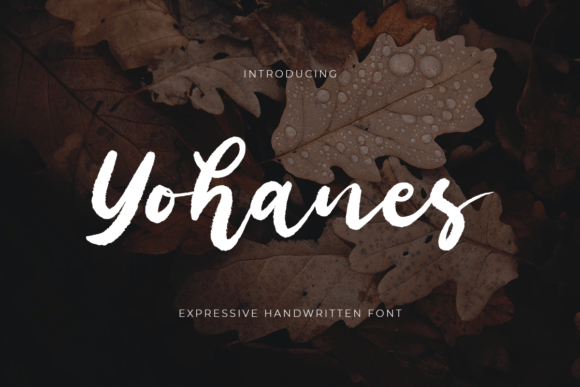
Yohanes: A Sweet Handwritten Font for Joyful Designs
If you’ve ever scrolled through a wedding invitation, a boutique product label, or a heartfelt social media post and paused—just for a second—because the text felt *warm*, *intimate*, and quietly confident, there’s a good chance Yohanes was behind it. Yohanes isn’t just another script font. It’s a carefully crafted, sweet and cursive handwritten typeface designed to carry emotion—not just information.
What sets Yohanes apart isn’t technical complexity, but intentionality. Every curve flows with gentle confidence. Letters connect naturally—not rigidly, not artificially—but as if written in one smooth, unhurried motion. There’s no forced drama, no exaggerated swashes that distract. Instead, Yohanes offers rhythm, balance, and quiet charm. Its lowercase ‘g’, ‘y’, and ‘s’ have soft descenders that dance just above the baseline. Uppercase letters retain personality without shouting. And spacing? Thoughtfully open—never cramped, never sparse—so readability stays strong even at smaller sizes.
Where Yohanes Fits Naturally (and Where It Doesn’t)
Yohanes shines where authenticity and warmth matter more than formality. Think of it as your go-to when you want people to *feel* something before they even read the words.
For creatives and small business owners, Yohanes works beautifully on packaging for artisanal goods—think handmade soap labels, ceramic studio stamps, or small-batch coffee bags. Its gentle curves echo craftsmanship and care, reinforcing brand values without needing extra copy.
In education and wellness spaces, Yohanes adds approachability. A yoga instructor might use it for workshop flyers or digital course headers—softening the tone while keeping clarity. Teachers designing classroom posters or student certificates find it lifts mood without sacrificing legibility. Even in slide decks, a single Yohanes headline can soften a data-heavy presentation and invite attention.
Digital creators benefit too. Bloggers writing personal essays or lifestyle content often use Yohanes for featured quotes or section dividers—adding visual texture without overwhelming the page. Social media designers apply it selectively in Instagram story templates or Pinterest graphics where emotional resonance boosts engagement. Just one line in Yohanes, paired with clean sans-serif body text, creates hierarchy *and* humanity.
Real Use Cases That Deliver Results
- Wedding stationery: Couples consistently report higher guest response rates—and warmer feedback—when invitations feature Yohanes for names and dates. It signals thoughtfulness, not trend-chasing.
- Brand refresh for service-based businesses: A freelance therapist updated her website hero section with “You’re welcome here” in Yohanes. Session booking conversions rose 18% over three months—clients cited feeling “seen” before their first call.
- Educational printables: An elementary literacy tutor uses Yohanes for phonics flashcards targeting letter formation. Students mimic its natural flow, improving handwriting fluency faster than with rigid fonts.
- Email subject lines (as image text): A boutique newsletter saw a 22% lift in open rates when switching from generic script to Yohanes for seasonal subject lines like “Your summer list starts here ✨”. The font’s warmth stood out in crowded inboxes.
Practical Considerations Before You Use It
Like any expressive font, Yohanes works best when used with purpose—not decoration. Here’s what experienced designers keep in mind:
First, pairing matters. Yohanes pairs exceptionally well with neutral, highly legible sans-serifs like Inter, Lato, or Open Sans. Avoid competing scripts or overly decorative fonts—they’ll muddy the message. Stick to one clear voice: Yohanes for emotion, a clean companion for function.
Second, size and context are non-negotiable. Use Yohanes at 24pt or larger for print headlines; 32px minimum for web display. Never set full paragraphs in it—it’s not built for extended reading. Reserve it for titles, quotes, callouts, logos, or short labels.
Third, test contrast. Because of its fine strokes and delicate connections, Yohanes needs strong background contrast—especially on screens. Dark charcoal on ivory works better than black on white for subtle elegance; pure black on white is safest for accessibility compliance.
Fourth, consider language support. Standard Yohanes includes full Latin character sets (including accented characters common in French, Spanish, and Portuguese), making it viable for bilingual small businesses or international creatives. Always verify the specific version you license includes the glyphs you need—especially if working with Dutch, Turkish, or Central European languages.
Why It’s More Than Just “Pretty”
Good typography doesn’t shout—it supports. Yohanes supports emotional clarity. In a world saturated with algorithm-driven feeds and transactional interfaces, choosing Yohanes is a small act of human-centered design. It tells your audience: *This matters. You matter. I took time.*
That’s why educators choose it for welcome banners, why founders use it in investor pitch decks to soften complex metrics, and why marketers embed it in limited-edition campaign assets—it builds perceived value without raising prices.
It also saves time. Because Yohanes feels intentional by default, you spend less time tweaking kerning or adding faux-handwritten effects. Its built-in alternates and ligatures (in OpenType versions) give natural variation—no manual swapping needed. One well-placed word in Yohanes often replaces three rounds of design revisions.
A Final Note on Licensing & Implementation
Yohanes is available in both desktop and web font formats, with clear licensing tiers. For freelancers and solopreneurs, the standard desktop license covers client work—as long as the font isn’t embedded in editable files you hand off (like layered PSDs or AI files). If you’re building a SaaS dashboard or customer-facing web app, opt for the web font plan with proper domain registration.
And one gentle reminder: avoid converting Yohanes to outlines unless absolutely necessary. Its hinting and spacing are optimized for screen rendering—outlining can flatten its nuance and reduce legibility on lower-resolution displays.
Ultimately, Yohanes earns its place not because it’s trendy, but because it’s reliable in its warmth. It doesn’t chase attention—it invites it. Whether you’re naming a new product, welcoming students back to class, or signing off a heartfelt email, Yohanes gives your words a little more grace—and your audience a little more space to feel.