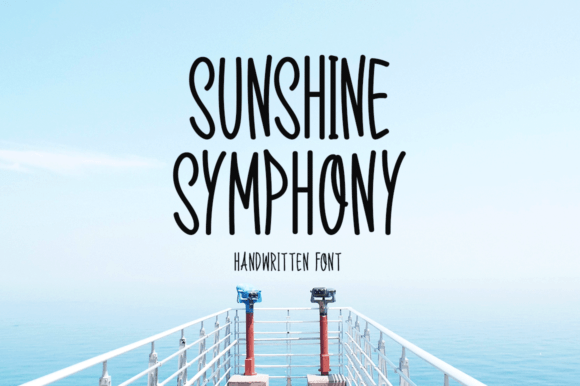
Sunshine Symphony
Sunshine Symphony isn’t just another handwritten font—it’s the quiet confidence in a wedding invitation, the warm sincerity behind a small-batch coffee label, and the effortless charm that makes a boutique clothing tag feel personal rather than printed. Designed with delicate, rhythmic strokes and subtle variation in line weight, this typeface balances spontaneity with polish—like handwriting refined through intention, not automation.
Where Sunshine Symphony Fits Naturally
You’ll find Sunshine Symphony thriving where authenticity meets elegance—especially in contexts where people are choosing *feeling* over formality. It doesn’t shout. It leans in. And because of that, it works best when paired with thoughtful design choices—not as filler, but as intentional voice.
Stationery That Feels Like a Personal Note
Think beyond “just another thank-you card.” With Sunshine Symphony, a baby announcement gains tenderness; a condolence note feels more human; even a holiday newsletter from a local bookstore carries quiet warmth. Its gentle curves and airy spacing prevent visual clutter—ideal for letterpress printing or foil-stamped envelopes. Designers report clients consistently describe pieces set in Sunshine Symphony as “thoughtful,” “inviting,” and “like something I’d want to keep.”
Clothing & Lifestyle Brands Seeking Soul
A linen shirt with an embroidered chest logo? A ceramic mug stamped with a short mantra? A tote bag carrying a hand-drawn phrase like “Breathe Deeply” or “Made With Care”? Sunshine Symphony excels here—not because it’s flashy, but because its organic rhythm mirrors the values these brands embody: craft, slowness, intention. It avoids the sterility of sans-serifs and the fussiness of overly ornate scripts. One sustainable apparel designer told us, “Our customers notice the difference. When we switched our tagline font to Sunshine Symphony, return comments about ‘how lovely the packaging felt’ went up 30%.”
Promotional Items That Stick Around
Branded pens, reusable notebooks, enamel pins, and custom tea towels—these aren’t just marketing tools. They’re touchpoints people interact with daily. Sunshine Symphony adds personality without sacrificing legibility at small sizes (down to 14pt comfortably). Its consistent x-height and open counters mean it holds up well on textured surfaces like kraft paper or unbleached cotton. A local bakery uses it across their seasonal menu board, sticker packs, and apron embroidery—and customers regularly photograph and share their signage, citing “the friendly handwriting vibe.”
Who Benefits Most—and How
Sunshine Symphony serves different needs depending on who’s using it:
- Small business owners appreciate how little tweaking it needs—no kerning panic, no awkward ligature surprises. It pairs easily with clean sans-serifs (like Poppins or Inter) for balanced hierarchy—headlines in Sunshine Symphony, body text in something neutral.
- Event planners and stationers rely on its versatility across formats: digital invites, laser-cut wood signs, vinyl decals for chalkboard menus, or even projection overlays during ceremonies. Its moderate contrast means it scans cleanly for PDFs and displays crisply on tablets during client presentations.
- Teachers, therapists, and wellness practitioners use it to soften clinical or institutional tones—think handouts titled “5 Gentle Grounding Practices” or workshop banners that say “You Belong Here.” The font subtly signals care, not coldness.
- Content creators and bloggers integrate it into quote graphics, Pinterest pins, and Instagram story highlights. Because it’s optimized for screen readability (with generous spacing and clear character shapes), quotes don’t blur or pixelate—even on older mobile devices.
What to Keep in Mind Before You Use It
Sunshine Symphony shines brightest when used with purpose—not everywhere, but *where it matters*. Here’s what experienced designers observe:
- Avoid dense blocks of text. While highly legible at headline sizes, its handwritten nature makes long paragraphs tiring to read. Reserve it for titles, short quotes, labels, and callouts—not body copy or legal disclaimers.
- Test contrast carefully. Its fine hairlines can fade on low-resolution prints or dark backgrounds. Always preview at actual size—especially for embroidery or heat-transfer applications where thread count or ink spread may soften details.
- Check language support. The standard version covers basic Latin characters (A–Z, numerals, common punctuation), but doesn’t include extended diacritics or Cyrillic/Greek glyphs. If your brand serves multilingual audiences, confirm compatibility before finalizing layouts.
- Pair thoughtfully—not randomly. It harmonizes beautifully with geometric sans-serifs, soft slab serifs, and even restrained serif fonts like Lora or Merriweather. But avoid competing scripts or ultra-decorative typefaces—they’ll clash, not complement.
When Sunshine Symphony Might Not Be the Right Fit
It’s honest to say: this isn’t the font for every project. If your brand identity hinges on bold authority (think law firms, financial dashboards, or tech startups emphasizing speed and precision), Sunshine Symphony may read as too gentle. Likewise, high-energy youth brands or streetwear labels often lean into bolder, more angular scripts—or intentionally imperfect brush fonts—for impact. And while it handles light color variations well, extremely saturated gradients or heavy textures beneath the text can overwhelm its subtlety.
Real-World Tweaks That Make a Difference
Designers who get the most out of Sunshine Symphony often make simple, effective adjustments:
- Scale with intention: At 24pt+, its elegance unfolds fully. At 10pt, even with tight tracking, it starts to lose clarity—so never force it into tiny footers or copyright lines.
- Add breathing room: Increase line height by 1.4–1.6x in multi-line settings. Its vertical rhythm thrives with space—not compression.
- Embrace minimal color: Black, charcoal, deep navy, or muted terracotta work better than neon or metallics, which can distract from its organic flow.
- Use OpenType features sparingly: The alternate glyphs (like swash capitals or contextual endings) add charm—but only activate 1–2 per layout. Overuse dilutes its quiet sophistication.
Sunshine Symphony doesn’t try to be everything. It’s focused, graceful, and deeply human—and that’s exactly why it resonates across industries, age groups, and creative goals. Whether you're designing a gift tag for a handmade candle or laying out a mindfulness app’s onboarding screens, it offers a rare combination: instant warmth, lasting refinement, and quiet confidence in every curve.