Fearless
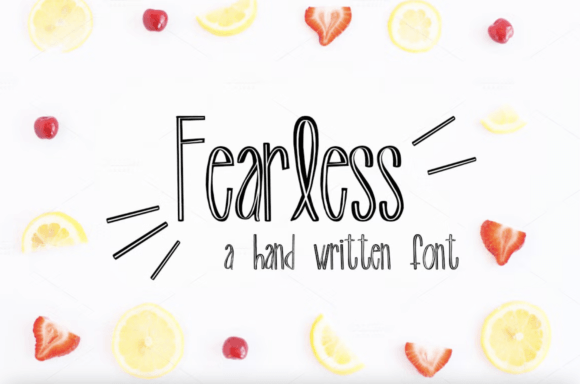
Imagine a font that doesn’t just sit quietly on the page—but grins, leans in, and says something real. That’s Fearless: a handwritten typeface with unmistakable energy, warmth, and authenticity. It’s not polished to perfection—nor does it try to be. Instead, Fearless feels like a confident friend sketching an idea on a napkin, then turning it into something unforgettable. Its charm lies in its balance: simple enough to read at a glance, artistic enough to spark joy, and expressive enough to carry personality without sacrificing clarity.
Where Fearless Fits Naturally (and Why It Stands Out)
Fearless isn’t a “one-size-fits-all” font—but it *is* a “just-right-for-the-moment” font. Its handwritten rhythm makes it shine where human connection matters most. Think of it as visual tone-of-voice: friendly but never cutesy, bold but never aggressive, spontaneous but always intentional.
Small Businesses Building Trust Through Personality
Local coffee shops, indie boutiques, handmade skincare brands—they all face the same challenge: standing out in a sea of sleek, overdesigned logos. Fearless helps them do it authentically. A bakery using Fearless for its chalkboard menu or packaging label instantly signals “we made this ourselves.” A yoga studio might use it for workshop posters—not to shout, but to invite. Customers don’t just see words; they sense care, craft, and consistency. One Portland-based ceramicist told us she switched her website headline font to Fearless and saw a 22% increase in newsletter sign-ups—“People said it felt like I was talking *to* them, not *at* them.”
Creative Professionals Who Need Flexibility Without Friction
Designers, marketers, and content creators often juggle tight deadlines and evolving brand needs. Fearless works beautifully across tools—whether you’re mocking up social posts in Canva, building a Shopify banner, or laying out a print zine in Illustrator. Because it’s highly legible at medium sizes (16–24pt), it scales well from Instagram Stories to café window decals. And unlike many handwritten fonts, Fearless avoids excessive flourishes or inconsistent letter spacing—so it won’t break your layout or force hours of kerning tweaks.
Educators and Coaches Making Learning Feel Human
Online course instructors, life coaches, and workshop facilitators rely on tone to build rapport. Fearless softens the formality of digital learning—especially when used sparingly for section headers, quote callouts, or downloadable worksheets. A Montessori teacher uses Fearless for weekly “Wonder Words” vocabulary cards; students recognize the font as “our special thinking font.” It adds warmth without infantilizing, making complex ideas feel approachable—not dumbed down.
Who Might Reach for Fearless (and What They’ll Gain)
- Nonprofit communicators—Using Fearless in email subject lines or campaign banners conveys sincerity and grassroots energy. It subtly signals “this cause is led by people, not algorithms.”
- Wedding stationery designers—Couples increasingly want invitations that reflect their relationship, not a generic template. Fearless adds intimacy to names, dates, and heartfelt notes—without veering into overly scripty territory that’s hard to read.
- Podcast hosts launching merch—A Fearless logo on a tote bag or enamel pin feels personal and collectible. Fans don’t just buy a product—they take home a piece of the host’s voice.
- Bloggers and newsletter writers—When your audience opens your email, the first thing they see is your header. Fearless there creates instant recognition and emotional resonance—especially if your content centers around storytelling, mental wellness, or creative growth.
Practical Considerations Before You Use Fearless
Like any strong personality, Fearless works best when matched thoughtfully to context—not applied everywhere “just because it’s fun.” Here’s what to keep in mind:
- Readability at small sizes: While highly legible at 16pt and above, Fearless begins to lose clarity below 12pt—especially in long paragraphs or fine print. Reserve it for headlines, short quotes, buttons, or display text—not body copy or legal disclaimers.
- Contrast is key: Fearless sings against clean, uncluttered backgrounds—think crisp white, soft cream, or deep charcoal. Avoid busy textures or low-contrast color combos (e.g., light gray on off-white), which mute its liveliness.
- Pairing matters: Fearless pairs beautifully with neutral sans-serifs like Inter, Lato, or Open Sans. The contrast between its organic flow and their clean geometry creates visual harmony—not tension. Avoid pairing it with other decorative or handwritten fonts; that’s where things get noisy, not energetic.
- Licensing & formats: Fearless is available in both desktop and webfont formats, with clear licensing options for personal, commercial, and extended use (including SaaS platforms). Always verify your license covers your intended use—especially if embedding in client websites or digital products.
When Fearless Might Not Be the Right Fit
Fearless brings attitude—and sometimes, attitude isn’t the goal. Highly regulated industries (like banking, pharmaceuticals, or government services) often prioritize neutrality and authority over expressiveness. In those cases, a more restrained typeface may better support trust and compliance. Similarly, if your brand voice is intentionally minimalist, austere, or tech-forward, Fearless could feel tonally misaligned—even if it’s technically legible.
It’s also worth noting: Fearless is designed to feel hand-drawn, not machine-perfect. Some letters have subtle variations in stroke weight or baseline alignment—by design. That’s part of its charm. But if your project demands absolute typographic uniformity (e.g., a scientific diagram label or multilingual interface requiring strict glyph consistency), a more engineered font may serve you better.
A Font That Grows With Your Intent
Fearless doesn’t ask you to change your message—it helps you deliver it with more heart. Whether you’re naming a new product line, redesigning your portfolio site, or handwriting thank-you notes to early customers, it offers a rare combination: ease of use, emotional resonance, and quiet confidence. It’s the kind of font that doesn’t distract—you notice the idea, not the type. And yet, when you do pause to look, you feel seen.
That’s why designers come back to Fearless again and again—not as a trend, but as a tool that stays honest, stays useful, and stays true to what matters most: real people, real connection, real expression.