Dreamy Cottage Deco
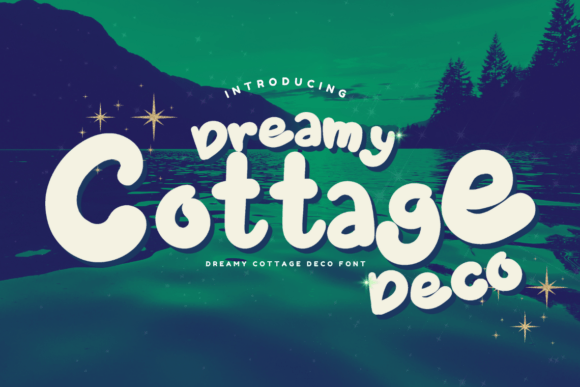
If you’ve ever flipped through a well-loved farmhouse cookbook, admired hand-lettered signage at a local flower shop, or paused on a wedding invitation that felt like it whispered “slow down and savor this moment,” you’ve sensed the quiet power of Dreamy Cottage Deco. It’s not just another handwritten font—it’s a mood, a texture, a visual sigh of relief in a world that moves too fast. Designed with soft curves, gentle irregularities, and subtle ink variation, Dreamy Cottage Deco captures the warmth of imperfect human touch: think pencil sketches on kraft paper, chalkboard menus wiped and rewritten daily, or vintage postcards tucked into a kitchen drawer.
Where This Font Finds Its Truest Home
Dreamy Cottage Deco thrives where authenticity matters more than precision—and where people are looking for connection, not perfection. It’s especially resonant for creators who serve audiences craving comfort, nostalgia, or intentionality. Here’s where it shines most naturally:
- Small-Business Branding: A ceramicist launching her first online shop might use Dreamy Cottage Deco for her logo tagline (“Hand-thrown in Vermont”) and product labels—pairing it with a clean sans-serif for body text to keep things legible but full of soul. The font quietly signals craftsmanship, care, and a personal story.
- Wedding & Event Design: For couples planning a barn reception, garden ceremony, or cozy mountain elopement, Dreamy Cottage Deco adds sincerity without saccharine sweetness. It works beautifully on seating charts printed on linen paper, foil-stamped menu cards, or even as a watermark behind watercolor illustrations on save-the-dates.
- Home Decor & Lifestyle Content: Bloggers sharing slow-living tips, DIY herb-drying guides, or seasonal tablescapes often lean into tactile visuals—and Dreamy Cottage Deco fits right in. Use it for quote graphics (“Tea is always the answer”), recipe headers (“Grandma’s Honey-Oat Scones”), or Instagram story text overlays that feel handmade, not algorithmic.
- Cafés, Bookshops & Boutiques: That little independent bookstore with mismatched chairs and floor-to-ceiling shelves? Their weekly newsletter subject line—“New Arrivals: Poetry & Pies”—feels warmer in Dreamy Cottage Deco. Same goes for café chalkboard specials (“Today’s Loaf: Seeded Rye + Honey Butter”) or boutique window decals inviting passersby inside.
Who Benefits—and How They Use It Differently
A graphic designer working with a wellness retreat brand might layer Dreamy Cottage Deco over soft-focus nature photos to evoke calm and groundedness—using it sparingly for headlines only, so the message lands gently. Meanwhile, a hobbyist selling printable wall art on Etsy may build entire designs around it: pairing it with botanical line drawings and muted earth tones to appeal to buyers decorating nurseries, reading nooks, or home offices.
Teachers creating classroom resources sometimes choose Dreamy Cottage Deco for bulletin board letters or student award certificates—not because it’s “cute,” but because its organic flow feels kind, unhurried, and inclusive. It subtly communicates that learning isn’t about rigid standards alone, but about presence, curiosity, and growth.
Practical Things to Keep in Mind Before You Use It
Dreamy Cottage Deco is expressive, not utilitarian—and that’s by design. Before dropping it into your next project, consider these real-world realities:
- Readability at small sizes: At under 16px, especially in digital interfaces or dense paragraphs, letterforms can blur together. Reserve it for headings, short quotes, logos, or decorative elements—not long-form body copy or mobile app buttons.
- Pairing matters deeply: It sings when balanced with something grounded—a warm neutral sans-serif (like Lora or Playfair Display for print; Inter or Nunito for screen) or even a subtle serif for contrast. Avoid pairing it with other highly decorative or script fonts—that creates visual noise, not harmony.
- Licensing clarity: If you’re using Dreamy Cottage Deco commercially—say, in a client’s packaging or a Shopify store theme—double-check the license covers your intended use. Some versions allow unlimited web use; others require extended licensing for merchandise or SaaS platforms.
- Color choices affect tone: In charcoal gray on ivory linen, it feels heirloom-quality. In sage green on cream, it reads pastoral and serene. But in neon pink on black? It risks feeling ironic or disjointed—unless that’s your deliberate aesthetic twist.
Strengths That Make It Worth Your Time
What sets Dreamy Cottage Deco apart from dozens of similar fonts is its intentional restraint. It avoids exaggerated swashes or forced quirkiness. Instead, it offers subtle rhythm—slight variations in stroke weight, natural entry/exit points, and spacing that breathes. That makes it unusually versatile across mediums: it translates well to embroidery digitizing, vinyl cutting for signage, and even hand-painted murals (as a tracing guide).
It also carries emotional resonance without leaning on cliché. Unlike fonts that scream “country” with oversized flourishes or cartoonish shapes, Dreamy Cottage Deco whispers. That quiet confidence helps brands feel trustworthy, not costumed. And because it’s designed with modern OpenType features (including stylistic alternates and ligatures), you can easily swap in a slightly different ‘a’ or ‘g’ to add nuance—without switching fonts entirely.
When It Might Not Be the Right Fit
Dreamy Cottage Deco isn’t meant for high-contrast tech startups, urgent healthcare communications, or luxury fashion campaigns built on sharp minimalism. If your audience values speed, scalability, or sleek futurism, this font may unintentionally soften your message too much. Likewise, if your project demands strict typographic hierarchy (think annual reports or academic journals), its inherent informality could undermine credibility.
And while it’s wonderfully evocative, it’s not inherently inclusive by default—so consider context carefully. A mental health nonprofit using it for outreach materials might find its warmth reassuring; a government agency communicating emergency protocols likely needs something more direct and universally legible.
Bringing It Into Your World—Thoughtfully
You don’t need to overhaul your entire brand to enjoy Dreamy Cottage Deco. Start small: try it on a single social media graphic announcing your next workshop. Swap it in for the header font on your blog’s “About Me” page. Use it to hand-letter a framed quote for your own kitchen wall—then notice how often guests pause to read it.
That’s the quiet magic of Dreamy Cottage Deco: it doesn’t shout. It invites. It slows the scroll. And in doing so, it helps you and your audience remember what matters—not just what’s trending, but what feels true.