Art Quin
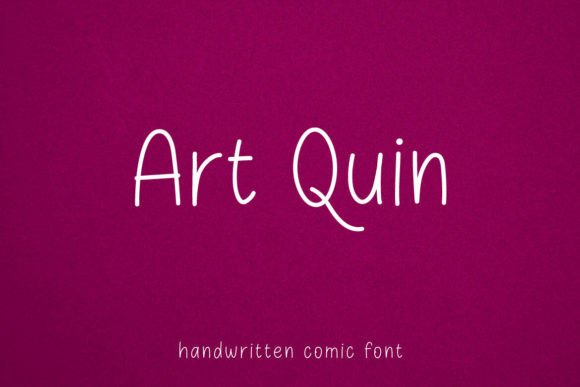
Art Quin isn’t just another script font—it’s a quiet, confident voice in a world that’s grown louder and bolder with every passing design trend. With its delicate strokes, consistent thin weight, and unmistakably human rhythm, Art Quin stands apart not by shouting, but by leaning in. It’s a thin handwritten font with a thin alphabet style—no dramatic swashes, no forced flourishes—just clean, intentional letterforms that feel both personal and precise. That balance is why designers, marketers, educators, and small business owners are reaching for Art Quin more often—not as a novelty, but as a tool that fits real work.
Why Thin Handwritten Fonts Are Gaining Ground
Over the past five years, digital communication has shifted toward authenticity without sacrificing polish. Consumers scroll past overproduced visuals in seconds—but pause for something that feels genuinely made, not algorithmically optimized. This isn’t about rejecting professionalism; it’s about redefining what professionalism looks like today. A sleek corporate logo no longer needs to be rigidly geometric to convey trust. A teacher’s classroom newsletter doesn’t need to mimic a textbook to feel credible. Art Quin meets that shift head-on: it carries the warmth of handwriting while maintaining the legibility and scalability required for modern use—from Instagram story text overlays to printed book spines.
This evolution mirrors broader habits: people now consume content across fragmented, fast-moving contexts—email subject lines, mobile app onboarding screens, podcast cover art, even QR code landing pages. In each case, clarity and character must coexist. Art Quin’s uniform thinness ensures readability at small sizes, while its subtle irregularities (a slightly tapered ‘t’, a gentle curve on the ‘s’) prevent visual fatigue during extended reading—especially important for long-form social posts or educational handouts.
Where Art Quin Fits Naturally—Not Just Decoratively
Many fonts are applied *on top* of content—as decoration. Art Quin works *with* content. Its strength lies in context-aware application. Consider a local bakery launching a seasonal menu: pairing Art Quin with a clean sans-serif body font (like Inter or Open Sans) creates hierarchy without contrast overload. The font doesn’t dominate the message—it frames it. Similarly, a freelance illustrator using Art Quin for their portfolio site headline signals craft and individuality, while keeping navigation and project descriptions highly functional.
It’s also proving practical in environments where brand consistency matters but resources are limited. A solo educator designing weekly PDF worksheets can use Art Quin for section headers and activity titles—adding visual distinction without requiring custom illustrations or complex layouts. No design degree needed. Just thoughtful placement.
Real-World Use Cases, Not Hypotheticals
- Flyers & Local Promotions: Small businesses find Art Quin effective for event dates, workshop names, or taglines—its light weight avoids visual competition with photography or background textures, letting imagery breathe.
- Book Titles & Chapter Openers: Especially in memoirs, poetry collections, or wellness guides, Art Quin introduces tone before the first sentence—suggesting intimacy, reflection, or quiet confidence.
- Social Media Captions & Carousels: When overlaying text on photos or short videos, Art Quin’s consistent stroke width holds up well against busy backgrounds, unlike bolder scripts that risk clumping or bleeding.
- Logos for Service-Based Brands: Therapists, yoga studios, copy editors, and financial coaches use Art Quin in wordmarks where approachability and expertise must coexist—never childish, never cold.
What’s Changed—And Why Now?
Five years ago, “handwritten” fonts were often associated with craft fairs, wedding invites, or playful kids’ apps. Today, they’re embedded in serious workflows—partly because variable font technology and improved web font loading have removed technical friction. But more importantly, cultural expectations have evolved. People don’t equate simplicity with lack of sophistication. They associate restraint with intention. Art Quin reflects that maturity: it doesn’t try to mimic calligraphy tools or emulate brush pressure. Instead, it offers a refined, digitally native interpretation of handwriting—one that’s been carefully spaced, kerned, and tested across devices.
That attention to detail matters when your audience includes professionals who notice typographic inconsistencies instinctively—like a marketing director reviewing a campaign mockup or a developer checking how text renders on iOS versus Android. Art Quin’s even spacing and predictable metrics reduce those micro-frictions. It’s not flashy—but it’s dependable.
Practical Tips for Using Art Quin Well
Like any expressive typeface, Art Quin rewards thoughtful pairing and restraint. Here’s what works—and what doesn’t—based on real usage patterns:
- Pair it with a neutral, highly legible sans-serif. Avoid other decorative or script fonts in the same layout. Art Quin’s personality shines brightest when supported by calm, functional typography elsewhere.
- Use it for short, high-impact text—not paragraphs. Its thin weight makes extended blocks difficult to scan, especially on lower-resolution screens. Reserve it for headlines, quotes, labels, or short calls to action.
- Adjust tracking slightly for larger sizes. At 48px and above, opening up letter spacing by 20–40 units often improves rhythm and prevents crowding—particularly with words containing multiple vertical strokes (‘ll’, ‘tt’, ‘ff’).
- Test contrast rigorously. While elegant on white, Art Quin can fade on light grays or soft gradients. Always verify minimum contrast ratios (4.5:1 for normal text) against intended backgrounds—especially for accessibility compliance.
- Consider licensing early. Art Quin is available in both desktop and web-friendly formats, but usage rights vary by platform. If you’re building a client website or SaaS dashboard, confirm the license covers dynamic text rendering—not just static exports.
Beyond Aesthetics: What Art Quin Signals About Your Work
Typography choices quietly shape perception—often more than we realize. Choosing Art Quin communicates several things at once: that you value clarity without sacrificing humanity; that you understand your audience’s attention is finite and precious; and that you’re willing to edit, refine, and prioritize meaning over ornament. It’s a subtle alignment between form and function—one that resonates with readers who’ve grown weary of visual noise but still expect polish.
For entrepreneurs launching a new service, that alignment builds trust faster than a stock photo ever could. For educators preparing learning materials, it signals respect—for students’ time, cognitive load, and diverse reading abilities. And for creators building personal brands, it offers differentiation without gimmickry. You’re not choosing a font to stand out—you’re choosing one that helps your message land, clearly and kindly.
A Font That Grows With You
Art Quin doesn’t demand reinvention to stay relevant. It doesn’t require trending color palettes or viral layout templates to succeed. Its utility comes from stability—not trend-chasing. As tools evolve (AI-assisted design, real-time collaboration platforms, cross-device publishing), fonts like Art Quin gain value precisely because they’re built to last: technically sound, visually coherent, and contextually flexible.
That durability makes it a smart investment—not just for today’s project, but for the next three years of evolving needs. Whether you’re drafting a single Instagram post or designing a full brand system, Art Quin adapts without asking you to compromise on tone, usability, or professionalism.
It won’t solve every design challenge. But when the goal is to communicate with warmth, precision, and quiet confidence—Art Quin is often the right first word.